Showing posts with label beer. Show all posts

Friday, November 8

Homebrew IX: Dunkelweizen

Dunkelweizen.
Most of you locals know that the local hobby shop, Kremer's Toy and Hobby, sells Brewer's Best homebrewing kits and supplies, and they often run specials. So a while back I went in with a few extra bucks and a coupon, and decided to brew my first wheat beer -- not some lemony summer brew, either, but a dunkelweizen, a relative rarity among the imports and craft brews crowding local beer shelves. My dad likes a dunkel when he can get it, and Weihenstephaner seems the most frequently available to me (and a world-class example, apparently). Both Beer Advocate and Rate Beer describe dunkels as what I would call "swampy" beers: dark, murky, yeasty, unfiltered beers, brown in color, earthy in flavor.

This dunkel brings the fruit and the funk of wheat beers, big time. Both websites above mention banana and clove notes, but I tend to taste pear undertones in mine. It is same murky brown of the Tahquamenon River when it's swollen with runoff, with a sour yeastiness that is far more enjoyable that it sounds and serves in the place of hops to balance the sweetness of the grain. It comes off the keg with a thick, creamy head and invites sip after sip. A good fall brew that's a big change of pace for me -- hope you like it, too!

Sunday, April 21

Pre-Big Brew Day Buzz: Miriam/Marian Beer?

Mary and Jesus at home, from The Passion of the Christ (2004)
The following exchange is excerpted and edited from a (much) longer email exchange about our upcoming Big Brew Day on Saturday, May 4. This is what Catholic brewers act like when they get punchy...the highlight, of course, is the mini-homily delivered by Fr. Richards. Well done, Father!

Karl: "If we brew in May, we should also honor Mary. (May is the month for Mary.) Should we have a contest to see who can brew something that Mary would like? We could call it Miriam Beer."

Jim: "That's a good idea -- although I'm fuzzy on how to judge that contest...  :-P"

Karl: "Well, if we ask all women named Mary? (Just kidding.) Otherwise, we could just ask Father Richards to judge. (This is only a hypothetical idea -- I am NOT 100% serious. LOL)

Jim: "I'm thinking of calling the beer I just bottled Crown of Creation Irish Draught Ale for the occasion -- or brewing some Morning Star Breakfast Stout -- hail, Mary!"

Tom: "Wow, is it that good?"

Jim: "Maybe not quite, but branding counts with beer -- consider the swill the general population drinks by the barrel...  :-)"

Mike: "Private revelation only: She prefers 90 Shilling. Sorry, guys."

Fr. Richards: "I'm pretty sure Mary would like any beer you would brew for her (in moderation, of course). She is always very encouraging to her sons, you know. It is like a son (albeit under 10) picking a wilted dandelion for his mom. It’s the gesture, not the quality. But, then again, you are adult sons, so make it good!"

Tom: "Great email, Father. I laughed out loud."

Karl: "I loved the email also. It made me want to look up a beer recipe. I found one that uses rose hips (in honor of Mary), orange peel, and coriander."

Laura: "Fr. Richards, you are so completely awesome. That is all."

Michael: "Laura, who do you go to for confession?"

Laura: "Wait, I'm supposed to go to confession??? ;)"

Michael: "Sorry, Laura, I forgot who I was talking to -- never mind."

Fr. Richards: "Karl started it. It’s his fault!"

Laura: "It's always safe to blame Karl -- hahaha! Hey, dudes...'Mary' means 'bitter' -- I think she'd be a little put out if you DIDN'T make some good beer during her month! Hops. Keep your beer 'pure' of yucky stuff, and then also add a richness and depth of flavor. Mary helps to keep you pure and will add a richness and depth to your life. Just sayin'.  :)  Also...I will volunteer to be the tasting judge of the Marian Beer contest. My middle name is Maria.''

Karl: "Wow, I walk away from the computer for a little bit, now I'm to blame. I'll take credit for this since brewing a beer for Mary is a good thing."

The Son's love for his mother, from The Passion of the Christ (2004)

Thursday, April 18

Homebrew VII: Irish Draught Ale

Spring has been slow in coming this year; as I write, the trees outside are being plastered white by an April snowstorm, and the cold of the basement concrete is seeping through my wool socks to the soles of my feet. Inside, however, I am warmed by my latest homebrew: Northern Brewer's Irish Draught Ale extract kit.

I had intended to brew this in time for the Feast of St. Patrick, but A) I got a late start, and B) I had given up beer for Lent. I had the right idea, though -- this is a beer for a blustery spring day, with just enough malt heft to hold its own against that last winter ale in the back of the fridge, and enough oat-n-honey smoothness to make it an easy drinker and thirst-quencher. The color is a ruddy, beer-bottle brown (depending on the light); the head pours thick and dissipates quickly. The flavor isn't like any other beer I recall -- I expected something like a Smithwick's or a creamier English pale ale, I guess, and that's not wrong, but not quite right either. The aroma is fruity, leaning almost to cider; the taste is roasted malt sweetness, but with enough hop bite to let you know that this is real, good ale.

I like it -- but more than that, I'm intrigued. Here's a beer recipe with a single ounce of Cluster hops to balance five-plus pounds of malt extract and a pound of honey. Here's a brew with a malty flavor unlike any I recall, that makes use of Maris-Otter malt, a long-time favorite of traditional English ale brewers that (I believe) only recently has become widely available to budding brewers like me. And as I drink it, I can't help but think this is a beer meant for kegging -- or maybe even nitrogen.

I'll brew this again. I joked with a friend that, in honor of the Virgin Mary, I was going to serve this at our Big Brew Day on Saturday, May 4, as Crown of Creation Irish Draught Ale. It may not be quite that immaculate, but this is a solid homebrew and a Real. Good. Ale.


Saturday, September 29

Drink Globally, Brew Locally:
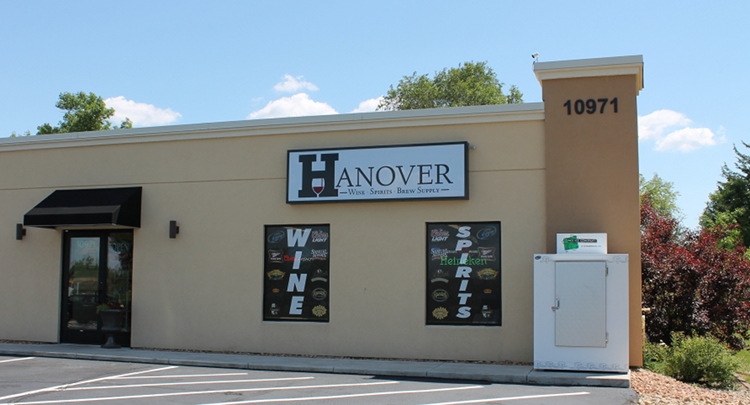
Hanover Wine, Spirits, and Brew Supply

Hanover Wine - Spirits - Brew Supply
On the west side of Highway 19, just past the sign that marks the Hanover city limits, sits the new destination for local homebrewers and craft beer lovers:  Hanover Wine, Spirits and Brew Supply. I've stopped by twice in the past two weeks -- first, to pick up some priming sugar after I started sanitizing bottles, then I realized my St. Paul Porter kit from Northern Brewer didn't come with any, and later to pick up some sanitizer, check out their beer selection and try pick up one their Brewer's Best kits to compare to Northern and Midwest Supplies. The Hanover shop has everything an extract brewer needs to get started and is certainly convenient for emergencies or last-minute brew sessions -- but after purchasing and brewing their Brewer's Best English Pale Ale kit today, I think I'll be a regular.

During my first visit, one of the partners who opened the shop assured me that they want to grow their brew supply business and could get anything that area homebrewers needed, including bulk all-grain supplies, at a reasonable price -- and would be happy to work with us on special orders. So as not to put them on the spot with other customers in the shop, I sent them an email afterward asking if they offered a 10% discount for members of AHA-registered clubs, like Midwest and Northern. Dan and Chadd quickly replied that they do; just bring your membership card. 

So on Friday, I picked up 32 ounces of Star San sanitizer, a Brewer's Best English Pale Ale Kit, and a six-pack of Furthermore Beer's limited-offer fall brew Fallen Apple. The down side? The prices are a little higher for ingredients and noticeably so for the sanitizer. The 32-oz bottle of Star San cost $22 after the club discount -- compared to the Northern and Midwest price of $16 before the club discount. The pale ale kit cost $39.99 ($35.99 after the discount), compared to $34.99 for a comparable beer kit from Northern and $27.49 from Midwest before the discount. 

On the flip side, gas and diesel ain't cheap, and neither is time spent in traffic. Drink globally, brew locally!

Brewer's Best English Pale Ale kit ingredients
The Brewer's Best kit from Hanover included the following:
  • 8 oz of Brewer's Best crushed caramel specialty grains, vacuum-sealed in a plastic bag;
  • 3.3 lbs of Muntons Light LME (liquid malt extract) in a can;
  • 2 lbs of Brewer's Best Light DME (dry malt extract), vacuum-sealed in plastic bags
  • 1 oz Brewer's Best Fuggle Bittering hops, vacuum-sealed in a plastic bag;
  • 3/4 oz Brewer's Best Tettnang Flavoring hops, vacuum-sealed in a plastic bag;
  • 1 oz of Brewer's Best/Hop Union aroma hops, vacuum-sealed in a plastic bag;
  • 1 packet DanStar Nottingham Ale Yeast;
  • Brewer's Best priming sugar;
  • a mesh grain bag;
  • thorough and clear brewing instructions, including tips and cautions for each step and a customizable hop/boil schedule;
  • and 60 Brewer's Best bottle caps.

With the exception of the crushed and vacuum-sealed specialty grains, these are, by and large, the same or similar ingredients you get from the other suppliers -- and the kit I received was completely self-contained, including yeast, priming sugar, and caps. Nothing missing; nothing extra to remember. Brewing this morning went relatively smoothly; if anything, I found it easier to get the LME out of a can than a jug, and the single packet of dry yeast, rehydrated, has already produced a more robust fermentation in the first several hours that any Wyeast "smack-pack" I've used. (Hanover does not yet stock Wyeast or White Labs yeast for homebrewers -- but I'm not sure I missed them today!)

If you're interested in tasting the results of my morning brew session, I'll be sharing samples in early November at Catholic Man Night. In the meantime, as I mentioned, I picked up Furthermore's Fallen Apple (a cream ale/hard cider concoction from Wisconsin that started out apply and underwhelming for me, but quickly rallied -- I wound up enjoying it very much!) and scoped out the other Furthermore brews and autumn seasonals. I used to always shop Westside in Albertville for craft beers and imports, then switched to the massive wall o' brew available at Cash Wise in St. Michael -- but Hanover has stuff (like Furthermore) that I have yet to see anyplace else. The best of Minnesota, Wisconsin and Illinois brews, plus great beers from across the country and around the world -- check 'em out, and
support our local brew store!

Tuesday, May 8

Board Game Brews


Last month I was challenged to put together a team and participate in the ultimate test of geeky manhood: an Axis & Allies tournament! This was no small challenge, given the complexity of the game, the fact that I am neither a big gamer (board or otherwise) nor a strong strategic thinker (I'm a from-the-gut/emotional type), and the experience of my opponent in this seeded tourney (20+ years). On the other hand, the penalty for not picking up the gauntlet was a year of being referred to (publicly, no doubt) as Mrs. Thorp -- so I accepted the challenge and formed a team.

I also volunteered to purchase beer for the event, one from each of the nations represented in the game. Here's how I broke it down:


Germany (Axis): Paulaner Oktoberfest-Marzen. Malty goodness, start to finish. So many choices for German beer, but I wanted something I hadn't tried before, from a good brewery (I've had Paulaner Doppelbock), and something a bit more substantial than a pilsner or a pale lager, since that was likely to be close to my Japanese brew. I prefer ales generally, but this was a solid choice.


Japan (Axis): Kirin Ichiban. I wanted a "representative" Japanese beer, and from what little I know about it, the big three beers of Japan are Sapporo, Kirin Ichiban, and Asahi. Read a couple of moderately positive reviews of Kirin; those and the legendary hooved monster on the label convinced me to go with Japan's oldest lager. Maybe a step above Miller or Budweiser in that you actually get a little malt and a whiff of hops, but otherwise, this is definitely a pale (pale!) lager.


U.S. (Allies): Anchor Steam. Anchor Liberty Ale or 21st Amedment's Brew Free or Die! IPA were my first thoughts, because of the patriotic names; however, I thought they might be hoppier than the players would like. I thought about picking up a Samuel Adams brew, then recalled that "steam" beer, or California common, is the original (and perhaps only?) native U.S. beer style: a lager brewed at ale temperatures from the pre-refrigeration days of the California Gold Rush. Smooth, clean, and easy to drink, with a nice balanced of malt and hops (tipped slightly toward the latter), Anchor Steam is one of my all-time favorite beers, and sort of sets the standard for this all-American style, so it was a shoo-in.


U.K. (Allies): Bass Pale Ale. Easy to drink even for Kirin fans, without being watered down. I've shared my love of Bass on these pages before and will make no apologies, since I was buying the beer.


U.S.S.R. (Allies): Baltika #6. I was worried about finding a Russian brew, since I'd never seen any in my favorite brew stores, but a friend assured me that Baltika is available in the Twin Cities. I sent a couple of emails (to Tournament Liquor in Blaine, which carries Baltika #6 -- a Baltic porter -- but was almost out, and Kramarczuk's Deli in Minneapolis, which cannot sell for consumption offsite) -- then learned from Kramarczuk's that Surdyk's on University carries it. I bought four 17(?)-ounce bottles at $2.50 apiece, and they were the highlight of the evening for the five of us to shared them. Black in color, with dark roasted malt and coffee flavors, and solid hop bitterness, in a unique, slightly hour-glassed bottle -- maybe not worth $2.50 on a daily basis, but worth it once in a while for change of pace. This beer stole the evening, and not just because I was playing the Russians.

Our team played until 2 a.m. We were the good guys and the underdogs: we battled a much more experienced to a draw, I would say -- but they looked at the board, saw the U.K. and the U.S. stacking up against Europe and the Russian infantry bloody but unbroken in Moscow, and conceded. Completely unexpected -- but victory went to the side with the better beers!

Sunday, May 6

Inaugural Brew Session Update

Eleven men showed; three brewed, including first-timer Kurt, vice president Mike, and treasurer Karl, who showed off and put to good use (for the first time) his all-grain set-up. Secretary Jim gave a brief primer on ale and lager styles, and we shared samples of El Presidente's hopped-up Bass Ale brew (which turned into more of a Sierra Nevada Pale Ale, Bob Z's stout, Mike's copper ale, Jim's Pete's Wicked clone, and more. Lunch was hotdogs and chips; special thanks to Mike for the "goat dogs" -- delicious pronghorn sausage. Great first event; can't wait for the next!


Wednesday, March 7

In Search of Small

I was talking to Our Fearless Leader awhile back about our mutual love of beer and, more recently, of brewing.

“I want to try everything!” Butch said. “Why not?”

Why not indeed? I was blessed to have a mentor in my introduction to beer, a young man who started me on craft brews and imports instead of Crispix lagers.* I believe I have consumed at least one example of every defined style of both ales and lagers, and I have loved at least one example of most of them. As I grew accustomed to various styles, I developed more of a taste for hops, and found myself drawn to breweries from the Pacific Northwest – Red Hook and Rogue were favorites – but after a six-pack or a couple of big bottles, I often found myself drawn back to more classic ales: English bitters, pales and porters; Irish stouts; and Scottish and Scotch ales.

* * * * *

Even now, with so many beers to choose from, I usually have a little Bass Ale on hand – a consistent, easy drinker that always pleases me. And since I’ve begun brewing, I’ve made…a basic English Pale Ale kit from Northern Brewer, and a basic Irish Stout kit and a Peter’s Wicked clone – a brown ale – from Midwest Supplies.

These are not beers that attract attention on a menu. Do I fear complexity or prefer plain? No – I’ll gladly try the latest malt-ilicious, hop-tastic concoction from the great craft brewers here in Minnesota and nationally, but when it comes to spending time and money on brewing my own – and generating two cases’ worth of any one kind – I like what I like. I like flavor, but I also like balance. I like quintessential examples of classic styles. I like easy drinkers.

* * * * *

I’ve never been one to drink to excess. I remember a gathering of in-laws at Gasthof zur Gemutlichkeit in Minneapolis, during which I drank a few mugs of my choice of beer, then twice found myself holding The Boot – a large glass pitcher of pilsner in the shape of, you guessed it, a boot – as the polka band ceased its festive wail, thereby obligating me to polish it off.** A short while later I rose to nature’s call, and found my head swimming in amber nectar. I resumed my seat, and said to Jodi that I thought I’d sit still awhile. My cheeks were warm; my tongue, thick – and I didn’t like the feeling.

You can say that I can’t hold my liquor – I’m okay with that. What bothers me most is that I genuinely enjoy good beer, and like to drink it and remember it. After three or so, I begin to lose track.

* * * * *

So a couple of weeks ago, I was browsing Anchor Brewing, source of two of my favorite brews (Anchor Steam and Anchor Porter), and ran across this page for Anchor Small Beer. Made from the second runnings from the grains of Anchor Old Foghorn Barleywine, it recalls an English Bitter and boasts a modest alcohol content of 3.3 percent. Small beer, apparently, is a style I hadn’t known. Anchor is brewing small beer, in an era of Big Beers. They call it “the original session beer.” Session beer is a phrase I’ve heard before, and I’ve gathered it means, roughly, a good multi-serving, social beer – a beer for a bull session.

Then last week, I ran across The Session Beer Project, which is dedicated to “small” beers. According to the proprietor, Lew Bryson, session beers are:
  • 4.5% alcohol by volume or less (some say
  • flavorful enough to be interesting
  • balanced enough for multiple pints
  • conducive to conversation
  • reasonably priced
The idea is that you can drink multiple pints of the same good brew and enjoy your dinner, argue with friends, or frame the Constitution and be none to worse for wear. This is not “near beer” – as I understand it, this is real beer, but meant as a tasty beverage to enhance an experience, not as an experience in itself. This is my kind of beer.

I want to be a session brewer.

I had already said my next kit would be an English Bitter – coincidentally enough, a session brew. I want beer I can serve to whoever stops by, breakfast, lunch, or dinner. I want beer I can drink, and still get my work done. I want to create a great session porter. A session stout. A session saison.

Go big or go home? I’m heading home – to a fridge full of session brews.

* * * * *

*Made with corn and rice, naturally…
**Once it was in my hands, and once it was in the hands of a diminutive older aunt, and I did the gentlemanly thing.


Friday, January 13

Who Was St. Arnold?


More on St. Arnold from a web site I hope to get to know better called Catholic Drinkie: Where Faith Meets Brew.

Pass the Beer Nuts


Blogger's Note: I had another beer-related post in mind for tonight, but ran out of creative juices. This piece originally appear under the headline above as a column in the February 24, 1998, edition of The Pioneer daily newspaper in Big Rapids, Michigan. It explains the origins and peculiarities of my love of beer. So gosh-darn cute and innocent, too. Oh, yes ... and this awesome poster image above? Not mine, but it can be purchased from the creative minds at Pop Chart Labs. Check it out!

"Bread is the staff of life,
but beer is life itself."
— old English proverb

The world is home to beer drinkers and beer lovers, and most often the two are not the same.

The majority of beer drinkers care little about the alchemy at work in converting bread and water into those heady concoctions known collectively as beer. Most beer drinkers buy their beverages in packs of twelve or more and are content believing that born-on dates and pure mountain water are the two most important elements in  choosing a beer.

Ever wonder why the less expensive domestic beers tend to tout their water? As beer judge and connoisseur Bob Klein said about one American brew, "...take away that crisp, clean, fresh liquid, and it'd hard to tell what you have left." Commercial breweries — those with "vats the size of Rhode Island" — speak highly of their water to avoid the Crispix debate: Which tastes better, the corn or the rice?


Barley, my friends — barley, hops yeast and water [Blogger's Addendum: And occasionally a little wheat...] give us ales and lagers; porters, stouts, lambics, pilsners, bocks and barley-wines.

The world is home to a great many beers, and I am a beer lover.

I began drinking regularly at the "proper" time in my life — my twenty-first birthday — which has given me interesting perspectives on beer and drinking. (At least I think they're interesting — they seem more so over a room-temperature Guinness.) I drank my first beer when I was three, sitting on my daddy's knee one summer day at a family barbecue. I was holding his beer for him, and asked if I could have a sip. Dad said sure, assuming, I'm certain, that I wouldn't like it.

I took a sip, and sat quietly for awhile, the took another.

A short while later, Dad took the can from me and was surprised to find it all but empty.

Did I like it? Did I get sick? I don't remember. [Blogger's Note: I do, however, remember the brand. Because I loved the jingle.]


I did not taste beer again until my twenty-first birthday — seriously. I did it then for two reasons: first, because I was of age — a sort of rite of passage — and second, because my future in-laws were drinkers of beer, and although they never pressured me to do so, I felt I'd like to be able to share the experience with them, and more importantly, be able to offer Jodi's father and brothers a beer when they came to visit us.

A couple of college buddies took me out to dinner that day and ordered me a respectable brew: Sam Adams Boston Lager. It was bitter, nasty, and I drank only half of it. My friends — good friends that they are — said the beer was on them, and to enjoy it or not at my discretion.

Still, I was determined to find a beer that liked. The following week, another friend, Steve, introduced me to a raspberry wheat beer ("If you can drink any beer, it's this one — it doesn't even taste like beer!" he said) and Woodchuck hard cider (not beer at all). Both were easy to drink, fruity and flavorful. Neither could be offered to Jodi's brothers with any sort of self-respect.


Steve took it upon himself to introduce me to a couple of new beers every week — the following week it was the English classic, Bass Pale Ale, and I was hooked. It was over that first Bass that I first gasped the mystical nature of beer. It occurred to me that, on first swallow, I thought Bass tasted pretty good; the second sip was better, and the more I drank, the more my taste buds relaxed, no longer bracing themselves against the bitterness of the hops or the sting of carbonation. I began to note intricacies of flavor I'd never noticed before, and I felt a certain oneness with the beer, until I was no longer certain who loved whom. I smiled at the revelation that I was no longer sure whether Bass tasted good or felt good, and smiled again at the notion that both were likely true, and it was impossible to extricate one from other.

As the weeks went on, Steve introduced me to a world of other beers — some black, some red, some brown, some yellow, and most very friendly. I discovered that when I discussed these beers with others, not everyone felt the same as I. Some beer drinkers liked only light beers, for example, and some beer drinkers, irrational as it seems, didn't like beer at all.

Which is why I say I began consuming beer, and it me, at the proper time. I drink beer because I enjoy the taste (some of which, I'll admit, is acquired — I do like Boston Lager now, especially on a hot day). I also began drinking beers A) not readily available in groups bigger than six, and B) too expensive to drink in mass quantities.

I remember a German exchange student in high school who could not understand her American friends' fascination with sneaking off with a case of beer to get drunk. In Germany, she drank beer with meals as just another beverage, and she didn't look at beer (especially American brews) as any sort of thrill or high.

I understand that now, but not everyone does.

Jodi and I had gone to a bar one evening with some friends of hers from work. I ordered a tall black and tan (a truly beautiful drink — the magic of physics causes Guinness Extra Stout to float atop Bass Pale Ale, and the layers remain separate: Irish and English, dark and light, yin and yang...). A short while later, I tried a Polish brew, in honor of my mother's heritage.


When my glass was again dry, I ordered a Samuel Adams Honey Porter. I do not drink to excess — after two beers, I was very relaxed and drank the third with scarcely a second's thought.

As I drained the glass, I realized that I had no idea what Sam Adams Honey Porter tasted like. When I voiced my disappointment, everyone except Jodi looked as me as thought I were nuts: "You don't have an impression of your last beer? That's a new one." "Yeah — who'd want to remember?"

Call me a beer nut — I would.