Showing posts with label homebrew. Show all posts

Wednesday, May 20

Homebrew X: Belgian Stout

At long last, another post: This spring I brewed Northern Brewer's limited edition Mustache Envy Belgian Stout, concocted for Men's Health Month (Mo-vember). I brewed the week before hernia surgery, so the wort spent a little extra time in the primary fermenter and a lot of extra time in the secondary. About halfway through the time in the secondary, I realized I had forgotten the oak cube, so I threw them in and gave it a little more.

This past Sunday I transferred it to the keg. I had planned to bottle this batch and keg a summery brew, but since I'm hosting a brew session this weekend and wanted something to sample, I changed my mind. Worse comes to worse, I'll use the homemade counter-pressure bottle filler Dad and I built to bottle off the keg.

After three days in the keg I dropped the pressure and pulled the pint pictured here. It pours a murky chocolate brown, with about a half inch of creamy head. The aroma is dark malt and oak. The taste is dark fruits, oak, Guinness and sweet red wine -- balanced, but with little discernible hop aroma or flavor. It is murky brown from top to bottom, like the Tahquamenon when it's running high with spring runoff, and it strikes me that it will get better with age. That's a happy thought, since it's pretty solid to start with!

If you're reading this and in the greater St. Michael-Albertville area, a couple of us will be brewing on Sunday from noon to 4 or so at the Thorp garage. Next up for me is Northern's California Common kit -- a hybrid brew (a lager brewed at ale temps) based on the authentic American beer style known as steam. (Anchor Steam is a long time favorite of mine, though whether it taste anything like historic steam beer I do not know.) Feel free to stop by and sample some Mustache Envy -- and if you'd like to brew, you're welcome to do so. Cheers!

Friday, November 8

Homebrew IX: Dunkelweizen

Dunkelweizen.
Most of you locals know that the local hobby shop, Kremer's Toy and Hobby, sells Brewer's Best homebrewing kits and supplies, and they often run specials. So a while back I went in with a few extra bucks and a coupon, and decided to brew my first wheat beer -- not some lemony summer brew, either, but a dunkelweizen, a relative rarity among the imports and craft brews crowding local beer shelves. My dad likes a dunkel when he can get it, and Weihenstephaner seems the most frequently available to me (and a world-class example, apparently). Both Beer Advocate and Rate Beer describe dunkels as what I would call "swampy" beers: dark, murky, yeasty, unfiltered beers, brown in color, earthy in flavor.

This dunkel brings the fruit and the funk of wheat beers, big time. Both websites above mention banana and clove notes, but I tend to taste pear undertones in mine. It is same murky brown of the Tahquamenon River when it's swollen with runoff, with a sour yeastiness that is far more enjoyable that it sounds and serves in the place of hops to balance the sweetness of the grain. It comes off the keg with a thick, creamy head and invites sip after sip. A good fall brew that's a big change of pace for me -- hope you like it, too!

Wednesday, August 14

Homebrew VIII, Part II: Brunch Stout Revisited

Just checking back in to say what a difference a month (or two) makes! Another few weeks in the keg (as Butch suggested), and Northern Brewer's Brunch Stout kit took on a smoother, deeper, more flavorful persona, with a thicker, creamier head and that appearance at the pour that I describe as "fallout," in which the bottom of the head appears to settle toward the bottom of the glass. (You seen this before if you've ever seen pint of Guinness fresh from the tap; sorry for the lame description.)

Karl came over with his counter-pressure bottle filler to help me fill some canister-top brown bottles for a family function in Wisconsin -- my uncle was celebrating his 70th birthday and 30th anniversary, and requested that I bring beer. I didn't want to bring the keg, partly for logistical reasons, and partly because this is not a beer for everyone and not a beer for a binge. (It would've broken my heart to see half-consumed plastic cups of brunch stout warming in the morning son after the celebration.) The bottles went over very well, however: Uncle Mel enjoyed it; Aunt Sandy turned green; my dad, my cousin's husband, and a local microbrew enthusiast all loved it. All good signs.

I recommend the kit whole-heartedly now, only give it time to mature. I'd love to taste it six months from now, but I'm afraid this keg is almost kicked. Cheers!

Tuesday, June 11

Homebrew VIII: Brunch Stout

Brunch stout.
Thought I’d share a quick review of my latest brew, Northern Brewer’s Brunch Stout from an extract kit. It’s the first beer I’ve kegged, and the most complex kit I’ve brewed – and while I’m enjoying it thoroughly, I would do a few things differently next time.

First off, I started with 6.5 gallons of water, as opposed to 5.5 or 6, which is my usual starting point. As a result, this stout (though by no means a BIG beer) is perhaps not quite as “big” as it ought to be.

Second, in addition to a massive amount of specialty grains and a pound of Belgian Candi Syrup (from beets and dates, as I recall), this kit contains a full pound of French roast coffee. The instructions say to crush the whole beans coarsely and add them to the wort, which I did. They do not say whether or not to remove them – I used a wire colander to scoop all that I could back out of the wort at the end of the boil, but some remained for the length of primary fermentation.

The result? Northern describes their brunch stout this way:
Brunch: a portmanteau of "breakfast" and "lunch". Brunch Stout: a collision of brunch as a particularly indulgent meal time, and a particularly indulgent stout. 60 IBUs, loaded with sumptuous malt, acidic and tangy coffee, and wildly fruity Candi syrup, this is a stout that does not know when to stop. There's something here for every interpretation of this decadent mid-cycle ritual, from the sweet to the savory, the simple to the intricate. Explore the limits of American-style stout as you know it with your new deviously delicious companion.
By contrast, what streams from my tap is a nice coffee stout, nearly black with a creamy mocha head. The flavor, to my palate, is almost exclusively strong black coffee and dark roasted malt, with more French-roast bitterness than hops. A pint left to warm a bit acquires some dark fruit hints as it approaches room temperature: blueberries and plums, perhaps, but they’re subtle. It reminds me of Guinness Foreign Extra or Sierra Nevada’s Narwhal Imperial Stout – a great stout, but not quite the multilayered egg-bake of a beer described.

Next time: Less water, and the coffee goes in a hops bag – plus I might screen it as it goes into the primary fermenter.

Sunday, April 21

Pre-Big Brew Day Buzz: Miriam/Marian Beer?

Mary and Jesus at home, from The Passion of the Christ (2004)
The following exchange is excerpted and edited from a (much) longer email exchange about our upcoming Big Brew Day on Saturday, May 4. This is what Catholic brewers act like when they get punchy...the highlight, of course, is the mini-homily delivered by Fr. Richards. Well done, Father!

Karl: "If we brew in May, we should also honor Mary. (May is the month for Mary.) Should we have a contest to see who can brew something that Mary would like? We could call it Miriam Beer."

Jim: "That's a good idea -- although I'm fuzzy on how to judge that contest...  :-P"

Karl: "Well, if we ask all women named Mary? (Just kidding.) Otherwise, we could just ask Father Richards to judge. (This is only a hypothetical idea -- I am NOT 100% serious. LOL)

Jim: "I'm thinking of calling the beer I just bottled Crown of Creation Irish Draught Ale for the occasion -- or brewing some Morning Star Breakfast Stout -- hail, Mary!"

Tom: "Wow, is it that good?"

Jim: "Maybe not quite, but branding counts with beer -- consider the swill the general population drinks by the barrel...  :-)"

Mike: "Private revelation only: She prefers 90 Shilling. Sorry, guys."

Fr. Richards: "I'm pretty sure Mary would like any beer you would brew for her (in moderation, of course). She is always very encouraging to her sons, you know. It is like a son (albeit under 10) picking a wilted dandelion for his mom. It’s the gesture, not the quality. But, then again, you are adult sons, so make it good!"

Tom: "Great email, Father. I laughed out loud."

Karl: "I loved the email also. It made me want to look up a beer recipe. I found one that uses rose hips (in honor of Mary), orange peel, and coriander."

Laura: "Fr. Richards, you are so completely awesome. That is all."

Michael: "Laura, who do you go to for confession?"

Laura: "Wait, I'm supposed to go to confession??? ;)"

Michael: "Sorry, Laura, I forgot who I was talking to -- never mind."

Fr. Richards: "Karl started it. It’s his fault!"

Laura: "It's always safe to blame Karl -- hahaha! Hey, dudes...'Mary' means 'bitter' -- I think she'd be a little put out if you DIDN'T make some good beer during her month! Hops. Keep your beer 'pure' of yucky stuff, and then also add a richness and depth of flavor. Mary helps to keep you pure and will add a richness and depth to your life. Just sayin'.  :)  Also...I will volunteer to be the tasting judge of the Marian Beer contest. My middle name is Maria.''

Karl: "Wow, I walk away from the computer for a little bit, now I'm to blame. I'll take credit for this since brewing a beer for Mary is a good thing."

The Son's love for his mother, from The Passion of the Christ (2004)

Tuesday, April 16

BIG BREW DAY!


Saturday, May 4, is National Homebrewing Day -- the Biggest Brew Day of the Year! Join Bottomless Pint Brewers at the home of our illustrious president Butch beginning at high noon to brew, sample great beers, talk shop, and more! Bring your latest brew to share!

We'd like as many men as possible brewing -- but especially for newer brewers, we'd like to stagger the starts -- so email bottomlesspint@gmail.com to let us know if you plan to brew. Also: if you'd like to brew but don't have your own gear, let us know and we'll pull together loaner equipment for you -- all you'll need is an ingredient kit!

Additional details:
  • For an address or directions, email bottomlesspint@gmail.com.
  • If you'd like to bring snacks or something grillable to share, that would be great, too!
  • We are starting at noon because local seminarian Paul will be ordained to the transitional deaconate at 10 a.m. Mass at the Basilica -- go there, then come celebrate!
  • This is also a great time to pay your dues and/or get your membership cards -- remember: 10% off at all local and area brew suppliers!

Cheers -- hope to see you there!

Wednesday, February 13

First Brew Session of 2013!

After a long, busy fall and winter, Bottomless Pint Brewers is holding its first club brew session of 2013 -- Sunday, Feb. 24, in Butch Nielsen's garage. We'll be there around 10 a.m. (after 8:30 mass) to start, so any time after that, stop by to brew or just visit and sample whatever's on hand.

If you have time, please email bottomlesspint@gmail.com to let us know you're coming. If you'd like to brew but don't have the gear, let us know -- we may be able to arrange for equipment, too!

Friday, October 19

Homebrew VI: St. Paul Porter

Dark and pleasantly bitter...
A year into homebrewing and my sixth batch is perhaps the best yet: a dark and pleasantly bitter brew called St. Paul Porter from Northern Brewer. It's not as thick or roasty as my Irish Stout, but every bit as flavorful, with notes (to my tongue, at least) of strong coffee and dark chocolate, and the bite of dark berries. (You know, the little pinch the skins of blueberries give your tastebuds on the way down? That's the way the hops manifest themselves -- not bitter, just a bit of a bite, if you follow me.)

It's been ages since I've had my favorite of this style, Anchor Porter, but this is what I remember: a beer that is very flavorful, surprisingly smooth, and seemingly strong -- although this one weighs in at just 5.5% alcohol.

It's a perfect fall beer. I think I'll have another.

Saturday, September 29

Drink Globally, Brew Locally:
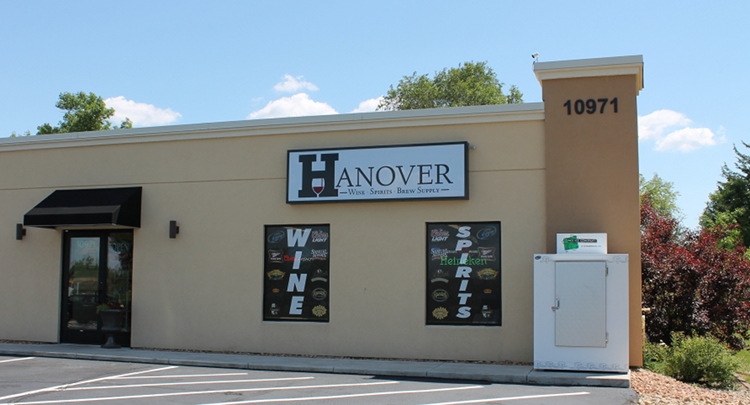
Hanover Wine, Spirits, and Brew Supply

Hanover Wine - Spirits - Brew Supply
On the west side of Highway 19, just past the sign that marks the Hanover city limits, sits the new destination for local homebrewers and craft beer lovers:  Hanover Wine, Spirits and Brew Supply. I've stopped by twice in the past two weeks -- first, to pick up some priming sugar after I started sanitizing bottles, then I realized my St. Paul Porter kit from Northern Brewer didn't come with any, and later to pick up some sanitizer, check out their beer selection and try pick up one their Brewer's Best kits to compare to Northern and Midwest Supplies. The Hanover shop has everything an extract brewer needs to get started and is certainly convenient for emergencies or last-minute brew sessions -- but after purchasing and brewing their Brewer's Best English Pale Ale kit today, I think I'll be a regular.

During my first visit, one of the partners who opened the shop assured me that they want to grow their brew supply business and could get anything that area homebrewers needed, including bulk all-grain supplies, at a reasonable price -- and would be happy to work with us on special orders. So as not to put them on the spot with other customers in the shop, I sent them an email afterward asking if they offered a 10% discount for members of AHA-registered clubs, like Midwest and Northern. Dan and Chadd quickly replied that they do; just bring your membership card. 

So on Friday, I picked up 32 ounces of Star San sanitizer, a Brewer's Best English Pale Ale Kit, and a six-pack of Furthermore Beer's limited-offer fall brew Fallen Apple. The down side? The prices are a little higher for ingredients and noticeably so for the sanitizer. The 32-oz bottle of Star San cost $22 after the club discount -- compared to the Northern and Midwest price of $16 before the club discount. The pale ale kit cost $39.99 ($35.99 after the discount), compared to $34.99 for a comparable beer kit from Northern and $27.49 from Midwest before the discount. 

On the flip side, gas and diesel ain't cheap, and neither is time spent in traffic. Drink globally, brew locally!

Brewer's Best English Pale Ale kit ingredients
The Brewer's Best kit from Hanover included the following:
  • 8 oz of Brewer's Best crushed caramel specialty grains, vacuum-sealed in a plastic bag;
  • 3.3 lbs of Muntons Light LME (liquid malt extract) in a can;
  • 2 lbs of Brewer's Best Light DME (dry malt extract), vacuum-sealed in plastic bags
  • 1 oz Brewer's Best Fuggle Bittering hops, vacuum-sealed in a plastic bag;
  • 3/4 oz Brewer's Best Tettnang Flavoring hops, vacuum-sealed in a plastic bag;
  • 1 oz of Brewer's Best/Hop Union aroma hops, vacuum-sealed in a plastic bag;
  • 1 packet DanStar Nottingham Ale Yeast;
  • Brewer's Best priming sugar;
  • a mesh grain bag;
  • thorough and clear brewing instructions, including tips and cautions for each step and a customizable hop/boil schedule;
  • and 60 Brewer's Best bottle caps.

With the exception of the crushed and vacuum-sealed specialty grains, these are, by and large, the same or similar ingredients you get from the other suppliers -- and the kit I received was completely self-contained, including yeast, priming sugar, and caps. Nothing missing; nothing extra to remember. Brewing this morning went relatively smoothly; if anything, I found it easier to get the LME out of a can than a jug, and the single packet of dry yeast, rehydrated, has already produced a more robust fermentation in the first several hours that any Wyeast "smack-pack" I've used. (Hanover does not yet stock Wyeast or White Labs yeast for homebrewers -- but I'm not sure I missed them today!)

If you're interested in tasting the results of my morning brew session, I'll be sharing samples in early November at Catholic Man Night. In the meantime, as I mentioned, I picked up Furthermore's Fallen Apple (a cream ale/hard cider concoction from Wisconsin that started out apply and underwhelming for me, but quickly rallied -- I wound up enjoying it very much!) and scoped out the other Furthermore brews and autumn seasonals. I used to always shop Westside in Albertville for craft beers and imports, then switched to the massive wall o' brew available at Cash Wise in St. Michael -- but Hanover has stuff (like Furthermore) that I have yet to see anyplace else. The best of Minnesota, Wisconsin and Illinois brews, plus great beers from across the country and around the world -- check 'em out, and
support our local brew store!

Saturday, July 7

Chickit Review: Pam Smith's Taddy Porter

I promised I'd give my gal-view of kits we've brewed so I figured I'd work a little bit backwards. The current brew in the keg is Pam Smith's Taddy Porter. It also happens to be my favorite so far. By my recollection, this is the third time we've brewed this kit from Midwest Brewing Supplies.

Butch brewed it this time in anticipation of our vacation (over Independence Day week) because my youngest sister, Anna was supposed to be there and she had tried it one of the other times we brewed it and she raved about it. She's got a refined palate so we respect her opinion about such things. Any time Butch gets such a positive response, he's bound to try to repeat the experience or try to improve upon it but this was the first time we kegged it (the other two times, we bottled).

Speaking of which, Butch is very very anti-bottling now that he has a keg. I'm afraid that when I bought him that thing, I may have created a keg snob. He's mostly afraid that we'll get some kind of major fail (happened before) but part of me thinks he's being a little bit lazy. I actually liked the bottling process and the ability to easily share the fruits of our labor but that's another story for another day.

Back to Pam:

My usual favorite beer is one that has at least some of the following qualities:

1. I should be able to taste the main ingredient (besides the grain/s/yeast/hops) somewhere in there...i.e. if it has "citrus" on the label, I should be able to taste it, even if it's subtle

2. It should have some sort of "boldness" or strength. It should taste...well..."beery". That's the best way I can think to describe it. It shouldn't taste like Zima (stop laughing, you know you gave it a shot once when you were 21 or so) or some kind of horrible wine cooler.

3. It should have at least three flavors to it so that it tastes different on my lips, tongue and back of mouth and have some sort of aftertaste too.

4. I should smile after sipping it.

The first time I tasted the porter, I didn't really notice the hops but the flavor was sort of dark and smokey without being too un-sweet. How's that for a girl's description of things? Okay, so I'm not so sophisticated in my expressions. I think most people can relate to that! I liked it a lot. I smiled. I wanted more. It tasted super beery and wonderful. It was warm and it made me happy.

More specifically, The foamy top had a nice, yeasty flavor, the firstness of the sip brings a little bit of the hops to the fore, the middlish of the sip brings that sort of smokey flavor to the tongue and the aftertaste reminds me of how good the next sip is going to feel. After all of that, the bottom of the glass makes me hope that it's not yet time to clean out the keg for the next batch of whatever Butch decides to brew next!

I think that this is a great beer for a rich meal of some kind of savory kind of meat. It might be nice to have with some sort of hearty appetizers too (picture a big plate of wings, steak tips, or stuffed potatoes and not so much some kind of light vinaigrette frou frou salad or spinach and artichoke dip).

Anna did not end up coming to our family week so the keg stayed home. Good thing it did because I now have a glass of that scrumptious stuff sitting next to me as I type. I'm sure it would be all gone, had it traveled with us this week!

Next review: (my second favorite of all of the beers we done brewed) "The Chewy Belgian" hahaha, just kidding, it's actually called "Grand Cru" (but "The Chewy Belgian" would be a GREAT name for a beer, don't you think?).

Tuesday, June 12

Homebrew V: English Bitter

A little more than a month ago, I embarked on my first solo brew. Prior to this, I had always done so with at least one other person brewing, and while the second set of eyes was certainly handy to avoid errors, the coordinated chaos of a group brew session (sharing sanitizer, aerators, wort chillers, etc.) meant that I hadn't really "locked down" the homebrewing process in my own mind.

Since we're headed into summer (and on the heels of my previous post "In Search of Small"), I opted for what I hoped would be a sunny-day-on-the-deck session brew: the English Bitter extract kit from Midwest Supplies.

It's a very simple and straightforward ale, so brewing went smoothly. Fermentation ramped up a bit slower than past brews, and then diminished rapidly once it peaked -- but I suppose this is not surprising for a session beer.  (In fact, I hit my starting gravity number right on, and when I took a second hydrometer reading after I transferred the ale to the secondary, it had already finished.)

After two weeks in the bottle, the pour was a bubbly, with a thick white head. A somewhat thicker layer of sediment appears at the bottle of these bottles than past brews, but if you pour carefully, it stays put, and the appearance in the glass is deep straw in color and crystal clear. (The photo does not do this justice.) The aroma is hoppy, but not staggering; hops predominate the flavor, but do not dominate or overpower. I'm going to describe the malt flavor as "biscuit," but I'm assuming in this case that the biscuits in question are English cookies or crackers, not Southern comfort food. If you get a little of the sediment in your pour, you might mistake this for a pale wheat ale; otherwise, this is an easy-drinking and refreshing "small" pale ale that, at 3 to 3.5% alcohol, can be enjoyed in multiples while remaining coherent.

I would recommend this for new brewers as an easy kit, and to beer-lovers who are used to American pilsners and pale lagers as a great first step into the world of ales. You definitely get that fruitier and more complex ale flavor, in a beer that is just as easy to drink as a Leinie's and as refreshing as a Rolling Rock.

Friday, March 23

Homebrew IV: Peter's Wicked Ale

When I first began to cultivate a taste for what are now called "craft" brews, Pete's Wicked was a brand to be reckoned with -- not only because they made decent beer, but more importantly, because they seemed ubiquitous: every store, bar, or restaurant that made an effort at having something "dark" on tap had either Pete's or Sam Adams. The actual shade of the beer didn't matter -- it was a step above Killian's, and thus was more beer than most patrons wanted to tackle. That sufficed to define it as dark.

I haven't had, or even seen, Pete's Wicked Ale in some time, and I recently discovered the reason: rapidly declining sales put it out of business a year ago. But the fact that it was started by a couple of California homebrewers (I had heard Minnesota and Wisconsin, but apparently not) and the fact that, with Sam Adams, Anchor, and Bell's, Pete's is credited with helping to kick off the craft brew revolution, warrant a clone kit at Midwest Supplies, dubbed Peter's Wicked Ale. This was what I brewed in February.

Two mishaps occurred in the process -- one completely minor, and one potentially major. On the minor end, I forgot altogether to take hydrometer readings, so I have no idea about the alcohol content of the brew. The potentially major issue stemmed from the fact that be brewed at a new location and that none of the brewers present had a wort chiller. I was the first ready to cool, and attempted to use a snow bank, which took probably an hour and a half -- plenty of time to introduce bacteria or other contaminants to the brew.

Fortunately, the flavor as I transferred from primary to secondary was promising, and the flavor at bottling even more so. After two weeks in the bottle, I opened two lukewarm bottles to instant eruptions of foam, but after deep chilling, three subsequent bottles have opened and poured perfectly.

Brown ales are always not the most exciting of brews; many seem to me to fall somewhere between solid and inoffensive (if not particularly memorable) to overly ___________ (insert a relevant adjective from the label: if it's a Nut Brown, then "nutty," if it's a Maple Brown, then "syrupy sweet"). It's been so long since I enjoyed Pete's Wicked -- and I do recall enjoying it -- that I had to dust off Bob Klein's Beer Lover's Rating Guide and see what he had to say back in the day:

"Lovely burnt caramel taste with fizziness; emerging sweetness as ale warms...not as thick and full-bodied as it could be, but still welcoming with its blend of warmth, fruitiness, and smoothness..."

Klein says a great deal more, especially with regard to specific food pairings, but this excerpt suffices for comparison's sake, since this is a clone kit (and since my palate is not nearly so refined). My version tastes to me a little less of burnt caramel and a little more of almonds and sweet whole grain bread; the head is substantial, but short-lived, leaving just a trace of Brussels lace that tracks slowly down the glass. It is, in fact, a bit sweeter as it warms, but is never overwhelming or cloying -- "not as thick or full-bodied as it could be," but it's certainly smooth and it drinks easily.

This is not a beer to knock your socks off, but it is, in my opinion, a big step above "solid and inoffensive" -- this is good brown ale!


Monday, March 19

Wicked Foam!

I opened my first two bottles of the Pete's Wicked Ale clone I brewed back in February. I hadn't really chilled the first, and as soon as I cracked it, it instantly foamed over -- I wound up with less than half a pint glass of good brown ale. What little I got was tasty enough that I wanted more, so I I put another in the fridge, thinking perhaps I jostled the first bottle or got a flukey one. Unfortunately, the second one erupted, too.

I'm chilling a couple bottles now -- trying to get them good and cold, recalling that gases dissolved better in cold liquids. It's possible that I didn't sufficiently or evenly mix my priming sugar (I don't rack to a bottling bucket, and stirring through carboy neck is challenging) but I've never had this problem before. Wish me luck!

Wednesday, March 7

In Search of Small

I was talking to Our Fearless Leader awhile back about our mutual love of beer and, more recently, of brewing.

“I want to try everything!” Butch said. “Why not?”

Why not indeed? I was blessed to have a mentor in my introduction to beer, a young man who started me on craft brews and imports instead of Crispix lagers.* I believe I have consumed at least one example of every defined style of both ales and lagers, and I have loved at least one example of most of them. As I grew accustomed to various styles, I developed more of a taste for hops, and found myself drawn to breweries from the Pacific Northwest – Red Hook and Rogue were favorites – but after a six-pack or a couple of big bottles, I often found myself drawn back to more classic ales: English bitters, pales and porters; Irish stouts; and Scottish and Scotch ales.

* * * * *

Even now, with so many beers to choose from, I usually have a little Bass Ale on hand – a consistent, easy drinker that always pleases me. And since I’ve begun brewing, I’ve made…a basic English Pale Ale kit from Northern Brewer, and a basic Irish Stout kit and a Peter’s Wicked clone – a brown ale – from Midwest Supplies.

These are not beers that attract attention on a menu. Do I fear complexity or prefer plain? No – I’ll gladly try the latest malt-ilicious, hop-tastic concoction from the great craft brewers here in Minnesota and nationally, but when it comes to spending time and money on brewing my own – and generating two cases’ worth of any one kind – I like what I like. I like flavor, but I also like balance. I like quintessential examples of classic styles. I like easy drinkers.

* * * * *

I’ve never been one to drink to excess. I remember a gathering of in-laws at Gasthof zur Gemutlichkeit in Minneapolis, during which I drank a few mugs of my choice of beer, then twice found myself holding The Boot – a large glass pitcher of pilsner in the shape of, you guessed it, a boot – as the polka band ceased its festive wail, thereby obligating me to polish it off.** A short while later I rose to nature’s call, and found my head swimming in amber nectar. I resumed my seat, and said to Jodi that I thought I’d sit still awhile. My cheeks were warm; my tongue, thick – and I didn’t like the feeling.

You can say that I can’t hold my liquor – I’m okay with that. What bothers me most is that I genuinely enjoy good beer, and like to drink it and remember it. After three or so, I begin to lose track.

* * * * *

So a couple of weeks ago, I was browsing Anchor Brewing, source of two of my favorite brews (Anchor Steam and Anchor Porter), and ran across this page for Anchor Small Beer. Made from the second runnings from the grains of Anchor Old Foghorn Barleywine, it recalls an English Bitter and boasts a modest alcohol content of 3.3 percent. Small beer, apparently, is a style I hadn’t known. Anchor is brewing small beer, in an era of Big Beers. They call it “the original session beer.” Session beer is a phrase I’ve heard before, and I’ve gathered it means, roughly, a good multi-serving, social beer – a beer for a bull session.

Then last week, I ran across The Session Beer Project, which is dedicated to “small” beers. According to the proprietor, Lew Bryson, session beers are:
  • 4.5% alcohol by volume or less (some say
  • flavorful enough to be interesting
  • balanced enough for multiple pints
  • conducive to conversation
  • reasonably priced
The idea is that you can drink multiple pints of the same good brew and enjoy your dinner, argue with friends, or frame the Constitution and be none to worse for wear. This is not “near beer” – as I understand it, this is real beer, but meant as a tasty beverage to enhance an experience, not as an experience in itself. This is my kind of beer.

I want to be a session brewer.

I had already said my next kit would be an English Bitter – coincidentally enough, a session brew. I want beer I can serve to whoever stops by, breakfast, lunch, or dinner. I want beer I can drink, and still get my work done. I want to create a great session porter. A session stout. A session saison.

Go big or go home? I’m heading home – to a fridge full of session brews.

* * * * *

*Made with corn and rice, naturally…
**Once it was in my hands, and once it was in the hands of a diminutive older aunt, and I did the gentlemanly thing.


Wednesday, February 29

Homebrew I+: English Pale Ale, Revisited


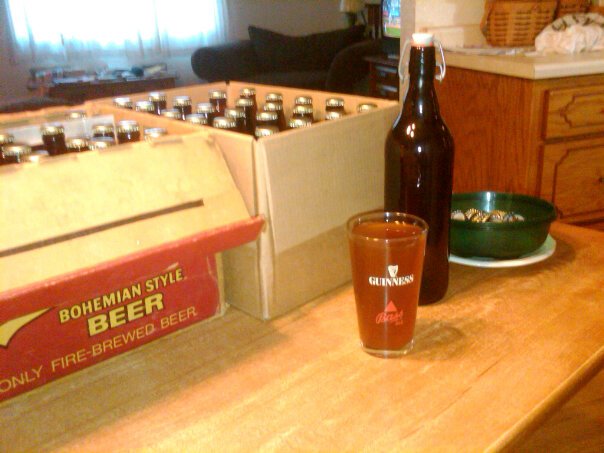
Pictured is my final pint of English Pale Ale, brewed last September and poured and consumed tonight. (Yes, Butch, I hoard my homebrew -- yours, too; there's a bottle of your second batch of Autumn Amber in my fridge, if you're interested.) You may recall that my big complaint was that the beer wouldn't pour or hold a head (as shown in the photo below, which accompanied my original post).

Now four months later, the last two bottles poured with a creamy, persistent layer of delicious foam that lasted the entire glass. Are my glasses finally clean? Or does it get that much better with age? Oh, but they were good, friends -- cheers!

Monday, February 27

Homebrew III: The Experiment

It’s almost time to bottle my fourth batch of homebrewed beer, a clone of Pete’s Wicked Ale brewed from a Midwest kit, which means I ought to finally report on batch three…The Experiment.

The Experiment came about like this: not long after my successful Irish Stout, some friends were gathering to brew again. I didn’t have the money to purchase another kit — but I did have a “can kit” left over from a misguided venture (retold here) into brewing a decade or so earlier when we still lived in Michigan. The can was a Munton’s Export Stout kit, containing hopped dark malt syrup and abridged instructions. I had a leftover packet of dry brewer’s yeast from my Irish Stout kit (I used a Wyeast packet instead) and, stealing an idea from a molasses stout recipe I’d seen online, I spent a few dollars on raw cane sugar to add to the mix in place of several cups of corn sugar. If all went well, I would have two cases of good dark beer for about five bucks.

I did not follow the instructions to the letter, but combined them with my past two brewing experiences – which means, primarily, that I boiled the ingredients longer. Fermentation was robust the first few days, as expected — the smell from the airlock was sweeter that the Irish stout had been, but with a whiff of hops. Unfortunately I forgot to take a hydrometer reading before sealing the primary fermenter, then dropped and broke my hydrometer during the transfer process. Since I had already drawn a sample during the transfer, I took the opportunity to taste the flat, room-temperature brew. It was sweet—not quite cloying, but sweeter than I had hoped—reminding me at first swallow more of a doppelbock than a stout (or even Samuel Adams Triple Bock, which Dad and I tried once and (like many others) did not enjoy).

I taste it again at bottling and was again struck by the sweetness. I had read that the raw sugar could lend a “rum” taste to the brew; I hoped the carbonated bottles would not be too sweet to be drinkable.

I opened the first bottle a few weeks ago. It was poorly carbonated, winey, and sweet. I drank about half the bottle and wasn’t crazy about it, but swirled the remained bottles and moved them to a warm place in hopes of further carbonating them. I tried another earlier this month, and while the carbonation was better, the head was still thin, fizzy, and brown, and the beer itself was simply too sweet for my taste. I probably should’ve used corn sugar as recommended, but at least I’ve seen something of the effect of raw sugar in that rummy/winey taste.

In the end, I dumped all but 12 bottles, which I kept for cooking. This weekend I cooked a pot roast in one – seared it first in a cast iron pan with olive oil, then put it in the crock pot with one bottle of The Experiment, two yellow onions (chunked), garlic salt, pepper, and Worchester sauce, and let it cook most of the day. The resulting meat was delicious – so the remaining 11 bottles will be good for something!

Monday, February 20

Club Launch!


Well, it's more or less official: St. Michael and Albertville, Minnesota, have a Catholic men's group/homebrewing club called Bottomless Pint Brewers! We are finalizing a draft charter -- our preliminary mission statement is below.

Mission
Bottomless Pint Brewers seeks to create lasting fraternal bonds among its members by:

  • Encouraging the art and science of homebrewing, improving the knowledge base of aspiring brewers, and fostering the responsible enjoyment of well-crafted beer;
  • Reinforcing the joy and vitality of manhood and the essential role of men—husbands and fathers; sons and brothers—in preserving our families, communities, and country; and
  • Deepening the faith of its members through shared activities and casual conversation with other Catholic men, as well as other more formal opportunities for evangelization and catechesis.

We hope to ramp up slowly through this spring and summer. Activities under consideration for the club include:
  • Club brewing sessions,
  • Homebrewing-related discussion groups or guest speakers,
  • Beer tastings and club socials for members and their spouses or guests,
  • A “Theology on Tap” guest speaker series, with beer (of course) and topics relevant to Catholic men and their spouses or guests,
  • Pub outings, brewery tours, or brewing courses in the Twin Cities and the surrounding area,
  • And competitions or other special events.
We are in the process of being recognized and listed by the American Homebrewers Association -- that, and official membership cards should earn members a discount at Midwest Supplies and other local brewer stores. We are considering modest annual dues (on the order of $10) to help offset the cost of producing membership cards, to pay for shared supplies like cleaner and sanitizer, etc. We hope the discount and camaraderie will more than make up for this charge, but please feel free to weigh in with a comment.

If you think you may be interested in the brewing process, in brewing your own beer yourself, or even in just trying homebrewed beer, we would love to hear from you! Email us at bottomlesspint@gmail.com or find us on Facebook at Bottomless Pint Brewers. Cheers!

Friday, January 13

Homebrew II: Irish Stout

My second batch of homebrew was an Irish Stout kit from Midwest Supplies, fermented with the recommended Wyeast packet in the same glass carboys and set-up used for my first batch. Brewing came off without a hitch, except that I forgot to take an initial hydrometer reading and then broke my hydrometer before taking a reading the afternoon I transferred to the secondary fermenter. (All this means is that I have no real idea regarding alcohol content, though from the feeling in my cheeks and ears, I'd say around 4.5 to 5 percent.)

The kit contained a small packet of gypsum, which (as I understand it) can be used to tweak the pH of your water, but in this context, is used to accentuate the bitterness of the brew and give you a drier stout. The wort tasted stoutish, and the samples at racking and bottling both tasted like flat stout...all good signs in my book.

The final result? This is good beer, like the non-draught bottled Guinness I used to buy, only (dare I say?) better. Like strong French roast coffee, hearty bread dark-toasted, with a pleasant prickliness that grabs your tongue on the way down. [Blogger's Note: I may be biased, since it's mine, my own, my...prrrrecious!] I've had one bottle chilled and several at basement temperature (around 65 degrees F), and all have been delicious, though the warmer ones are decidedly better in my book.

Complaints? I definitely get a better head with these (see the top photo), but it still lingers only a few minutes. Also, I had hoped to make an all-homebrew black and tan with one my few remaining English pale ales, but despite my Dad's insistence that he has successfully pour a black and tan with non-draught stout, I failed on multiple attempts. The resulting mistakes were consumed, of course, and fortunately tasted like good dark beer.

My next brew awaits bottling. It's a bit of an experiment using an old stout kit from a decade ago. More on that when the time comes. In the meantime, as Dad and I would say, "Na zdrowie!"*


-----

*Na zdrowie (nah ZDRO-vee-ah) is a Polish toast meaning "to your health."

Homebrew I: English Pale Ale

It's official: I'm a home-brewer.

I tried brewing once, probably a decade ago, in Michigan. I had pretty basic equipment, and a kit from a big can, and I did it with The Complete Joy of Homebrewing to provide too much information and with no mentor to filter it.

It was a train-wreck. Among other things, my standard of cleanliness was nowhere near brewing standards, and in mid-boil, my third-grade teacher called (seriously?!) because she had heard I was back in Michigan and wanted to reconnect (SERIOUSLY?!?).* I made enough mistakes that the wort (pronounced "wert") never so much as belched, let alone bubbled. For a couple weeks I had a murky brown liquid in my basement, stagnant as swamp water. Then I dumped it. Nobody told me I could get new yeast and re-pitch it in hopes of starting fermentation. I kept the equipment, but never went back to it.

Now I have a slew of friends who brew, or have brewed, and lots of practical experience to guide me. So back in September, four of us got together to brew: a porter, two 90 Shilling clones, and an English pale ale, my choice, because Bass Ale has long been my consistent favorite beer to drink, any time, any place.

Brewing notes:
Brewing went smoothly until late in the process. The first sign of a potential problem was after I loaded my fermenter in the van to return home, and noticed that the disinfected water filling my airlock was slowly, but steadily, dripping into my brew. I refilled the airlock, drove home, then looked at the temp gauge on the side of the fermenter, and saw that it was still pushing 80 degrees. I was not supposed to pitch the yeast into the wort until the temp was down to 78 degrees -- and if you pitch it too hot, the heat can kill the yeast. The dripping airlock was a signal -- as the sealed fermenter cooled, the pressure lowered, drawing the airlock fluid down.

My brewing friends were already reporting active fermentation, and nothing was happening on my end. I did some quick googling and learned: 1) It can be a couple days before things really get percolating; 2) yeast are tough, and can survive temps up around 100 degrees without any real ill-effects; and 3) if it didn't take off in a couple days, I could get new yeast and try again.

My fears were ill-founded, as it turned out: by that evening, the airlock was bubbling merrily.

We brewed on Sept. 3. Within a couple of days, the fermenter was bubbling steadily every couple seconds; over the course of the next week it decelerated by about half each day. By Sept. 15, active fermentation had ceased, and I transferred the brew to my secondary fermenter. I bottled on Oct. 9. On all three dates, the hydrometer showed about 4.5 percent alcohol, and the taste started out good (as wort) and improved steadily.

Beer notes:
The flavor is good: malt and hops balance well, with no "off" flavors so far. Chilled bottled drink very smoothly and easily -- a little too smoothly, in fact -- the colder it is, the harder it is to taste much of anything. At first I thought it was more like an English bitter (which, strangely, are less bitter than pale ales), but at closer to room temperature, the flavor and mouthfeel seem to "thicken up" a bit. (Not sure if that makes sense, but there you are...) At warmer temps, it reminds me more of Old Speckled Hen than Bass...though it's been years since I've had Old Speckled Hen. Guess I'm due for a refresher, in case I'm misremembering.

One problem (aside from the flavor being a little too faint): it does not hold a head. I get about half or three-quarters of an inch of foam that quickly disappears. This may be an issue of glass cleanliness, but I don't think so. We've also encountered one flat bottle that appears to have been inadequately capped. (Sorry, Butch -- you didn't have to drink it!)

This English Pale Ale kit came from Northern Brewer in St. Paul, and was brewed using Wyeast 1945 NB Neobrittania. I hope to compare it to the Brass Ale kit (a Bass clone kit) from Midwest Supplies in the near future. This coming weekend, however, I'm brewing Midwest's Irish Stout. Wish me luck!

-----

*Turns out she had a "money-making opportunity" she wanted to share with me and my wife -- one of four people from my past who emerged that year to try to get me to sell Amway.